Charles John Huffam Dickens was born in a modest terraced house in Portsmouth on 7 February 1812. Though his family remained in the city for just three years, that brief beginning marked Portsmouth as the birthplace of one of Britain's most celebrated novelists.
A Naval Beginning at 1 Mile End Terrace
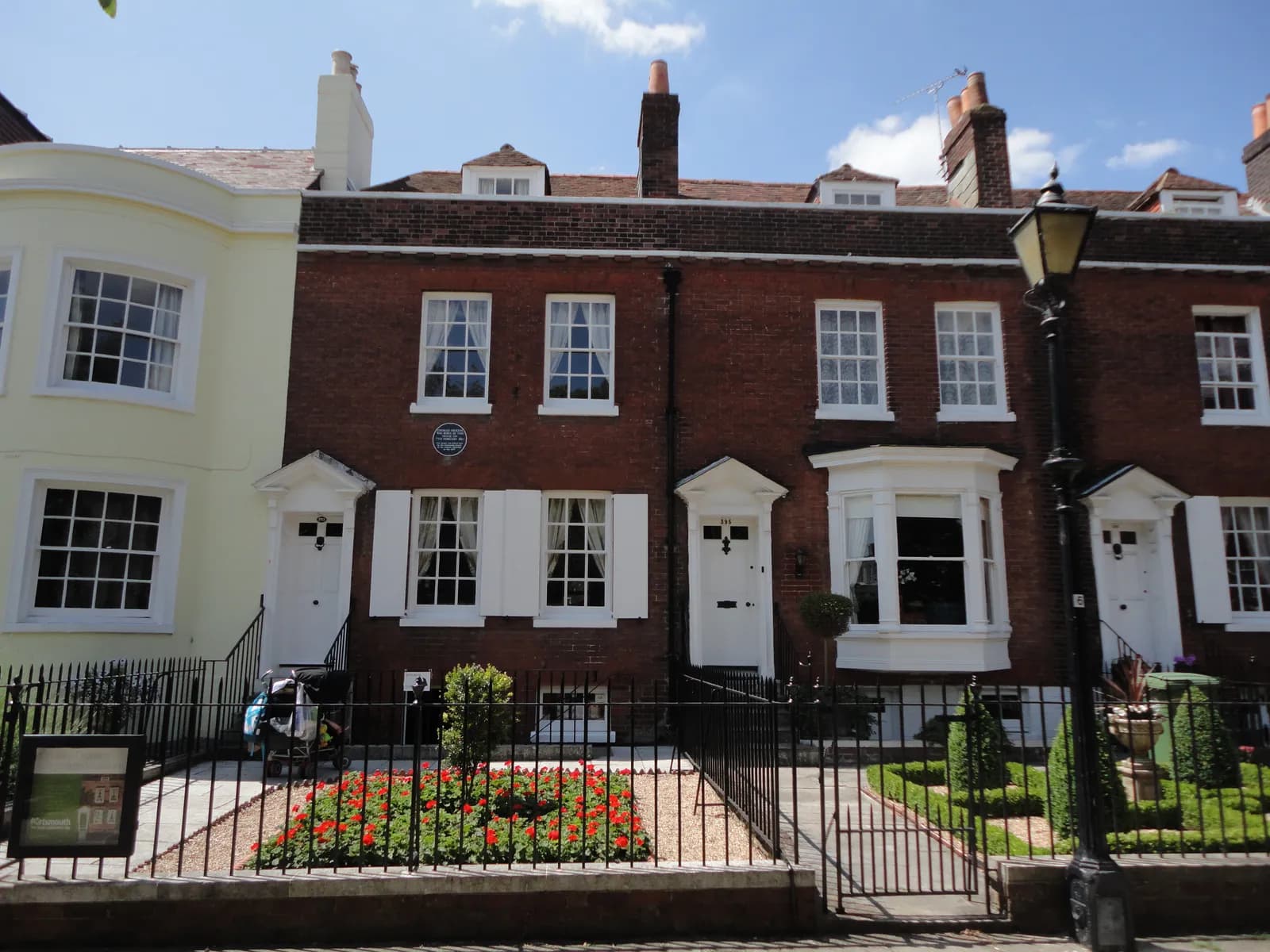
The future author of Oliver Twist and Great Expectations entered the world at 1 Mile End Terrace in Landport, now known as 393 Old Commercial Road. His father, John Dickens, worked as a clerk in the Royal Navy Pay Office, stationed in Portsmouth at the time. The house, a simple Regency-style terrace typical of the period, belied the extraordinary literary career that would follow.
The family remained in Portsmouth until January 1815, when John Dickens was transferred to London. A brief stint in the capital was followed by a move to Chatham, Kent, where the young Charles spent his formative years until age 11. Yet despite leaving the city as a toddler, Dickens maintained a lifelong connection to his birthplace.
The Birthplace Museum: A Window into Regency Portsmouth
The city has preserved 393 Old Commercial Road as the Charles Dickens' Birthplace Museum. The building has been owned by Portsmouth since 1904 and was restored in the 1960s to reflect Regency-period interiors.
Visitors can explore the bedroom where Dickens was born, the dining room, and a kitchen featuring an original dresser built into the party wall. The parlour completes the domestic picture of a naval clerk's family home in the early nineteenth century.
Among the museum's notable exhibits is the couch on which Dickens died, presented by his sister-in-law Georgina Hogarth in 1909. The collection also includes handwritten letters, original illustrations by George Cruikshank and 'Phiz' (Hablot Knight Browne), and various personal items that belonged to the author. Portsmouth Museums holds over 1,000 works relating to Dickens, including a watercolour portrait of his mother, Elizabeth Dickens, painted around 1845 by Clarkson Stanfield.
The museum opens from 10am to 4.30pm, with last admission at 4pm, on selected days throughout the year.
Portsmouth in Dickens's Work and Life
Dickens returned to Portsmouth on several occasions during his career. While researching his third novel, The Adventures of Nicholas Nickleby, he visited the city and sought out his childhood home. He also returned for numerous reading tours, drawing large crowds who came to hear the author perform his own characters.
Portsmouth connections extended into his fiction. Christopher Huffam, Dickens's godfather, worked as a rigger in the Royal Navy and provided inspiration for the character of Paul Dombey in Dombey and Son, published in 1848. The naval heritage of his birthplace echoed through his writing, particularly in works that examined British institutions and social structures.
Following the Dickens Trail Today
Portsmouth has developed a Dickens Trail, a walking route covering approximately 14 sites across nearly 8 miles. The trail begins at the Birthplace Museum and passes the statue of Dickens in Guildhall Square, continuing to buildings and locations that influenced his life and work.
The statue in Guildhall Square, bearing an inscription marking his birth date, stands as perhaps the most visible reminder of the city's literary heritage. A blue plaque also marks the exterior of the birthplace house.
The Bicentenary and Lasting Legacy
The 200th anniversary of Dickens's birth in 2012 prompted significant celebrations in Portsmouth. A service at St Mary's Church featured readings by actor Simon Callow and actress Sheila Hancock. Ian Dickens, the author's great-great-grandson, laid a wreath at the birthplace. The Prince of Wales marked the occasion by laying a wreath at Poets' Corner in Westminster Abbey, where Dickens is buried.
The bicentenary also included a 24-hour "readathon" spanning 66 countries, demonstrating the global reach of the author who began life in a modest Portsmouth terrace.
A Reluctant Monument
Ironically, Dickens himself had stipulated in his will: "no public ceremonies, no statues, no public acknowledgement." Historian Judith Flanders has noted this directive, yet Portsmouth, like the rest of Britain, has chosen to honour its most famous son regardless. The city that gave him life now preserves his memory for visitors from around the world.