Drive east out of Portsmouth on the Eastern Road and you cross land where racehorses once ran. Portsmouth Park, a racecourse at Farlington between the Havant road and the shore, opened in 1891 with its own railway station. Racing stopped during the First World War, when the War Office turned the site into an ammunition depot, and it never returned. Today Portsmouth's racegoers keep going east, and in October two Sussex courses are within an hour along the coast.
October 2026: the nearest fixtures
- Saturday 3 October: Fontwell Park, jump racing (billed as an Oktoberfest raceday)
- Sunday 11 October: Goodwood, flat racing, the final meeting of Goodwood's season
- Wednesday 21 October: Fontwell Park, jump racing
Fontwell's website also shows an additional afternoon fixture on Thursday 15 October, so it is worth checking there if that date suits better.
The coast road
The route itself is part of the appeal. The A27 runs past Havant and Emsworth, skirts the northern edge of Chichester Harbour and bypasses Chichester, with the cathedral spire visible across the fields. Goodwood is signed off to the north, up on the Downs. Fontwell Park lies a few miles further east, where the A27 meets the A29, roughly halfway between Chichester and Arundel. By train, the coastal line from Portsmouth serves Chichester for Goodwood and Barnham, the nearest station to Fontwell.
For a city that has spent centuries looking out to sea, Portsmouth's racing history is short but vivid. The Farlington course came with every modern facility of the 1890s, and race trains ran to its own station. After the First World War the War Office kept control of the land until 1929, when the city council bought it, and much of it went on to be built over. The A2030 Eastern Road, laid during the Second World War, crosses the old course and the Drayton marshes beside it. Anyone driving out towards Fontwell or Goodwood is, for the first mile or two, travelling over Portsmouth's own lost racecourse.
Fontwell Park: a village course with a royal debut
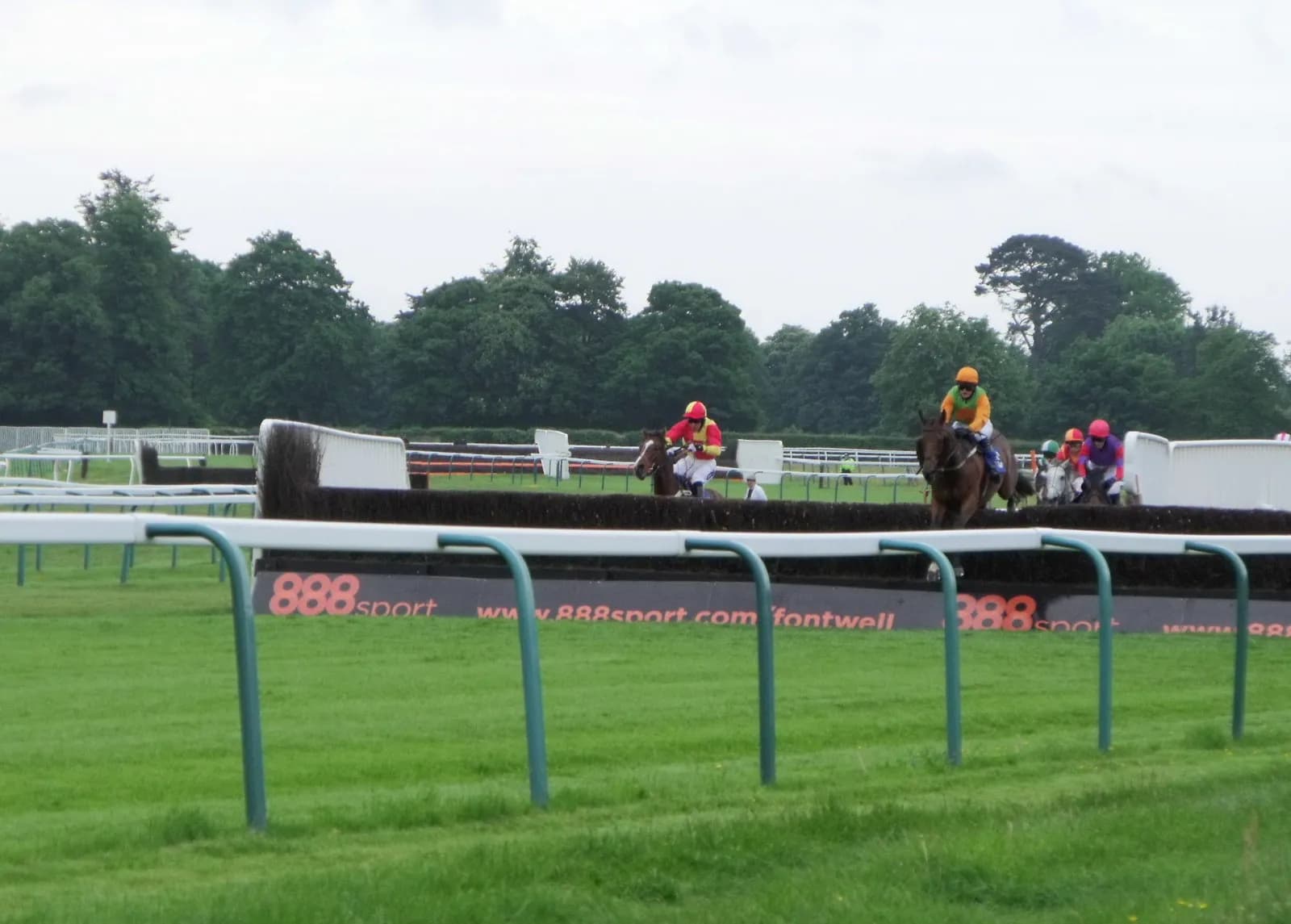
Fontwell Park owes its existence to Alfred Day, who had trained racehorses in the village since 1887. He opened the course on 21 May 1924, and the very first race went to the favourite, Gem. Short of space, Day built his steeplechase course in a figure of eight, a layout found nowhere else in Britain. The hurdles course is a conventional oval inside it.
In October 1949 Fontwell gave Princess Elizabeth, the future Queen, her first winner as an owner, when Monaveen won the Chichester Handicap Chase. The course's most important race now is the National Spirit Hurdle each February, a recognised trial for the Cheltenham Festival whose past winners include Lough Derg, twice, and Celestial Halo. Owned by Arena Racing Company, Fontwell opened a new grandstand in 2010.
Goodwood: two centuries on the Downs
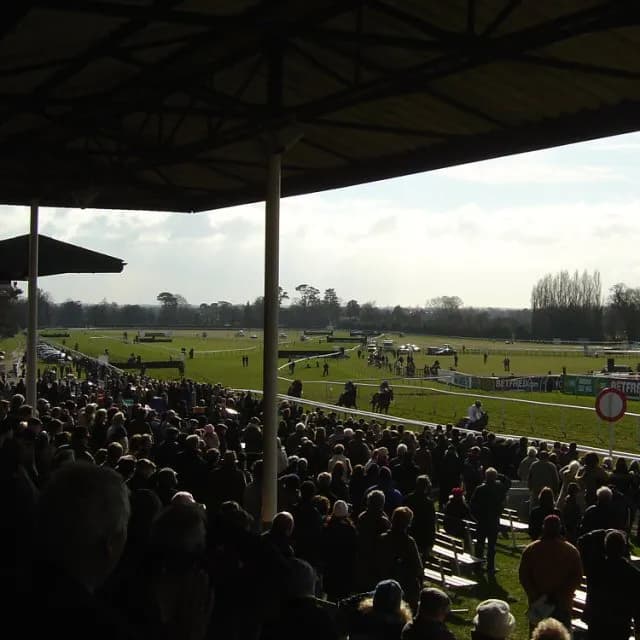
Goodwood racing began in 1801, when the third Duke of Richmond let the officers of the Sussex Militia race on a ridge of the Downs above his house after their usual venue at Petworth Park was withdrawn. A public meeting followed in 1802. That summer meeting became Glorious Goodwood, which King Edward VII described as "a garden party with racing tacked on". Goodwood now stages three Group 1 races: the Sussex Stakes, the Goodwood Cup and the Nassau Stakes. Frankel won the Sussex Stakes in 2011 and again in 2012.
The 11 October season finale is very different from the summer festival: a relaxed autumn Sunday with two-year-old races and handicaps, and fire pits on the lawns.
For the seasoned racegoer
Fontwell's figure of eight means chasers race both left- and right-handed in the same contest, and the turns come thick and fast. Horses that jump accurately and travel round tight bends without losing momentum tend to thrive. Early-October jumps cards are transitional: the summer jumpers are still about, and some better-class horses will be having their first run of the autumn, so fitness and the paddock count for a lot.
Goodwood is a different examination. The six-furlong straight rises and then falls, and the right-handed loop that feeds the longer races is tight and undulating. Draw and position can matter, especially in big fields. The finale's juvenile races are a chance to see two-year-olds who may be heard of again next season.
The two Fontwell fixtures will also feel different from each other. The Saturday card on 3 October comes with a Bavarian-themed programme of music and entertainment, which makes it a sociable choice for groups. The Wednesday meeting on 21 October is a quieter midweek afternoon, ideal for anyone who would rather concentrate on the horses and the jumping.
For a first visit
Both courses are friendly to newcomers. At Fontwell, find a spot inside the figure of eight or near a fence to feel the speed of the horses as they jump. At Goodwood, the views over the Downs are half the attraction.
Dress is smart casual. Bring a warm coat and something waterproof in October, and shoes that can handle grass. Go to the parade ring before each race and look at the horses walking round: calm, alert and moving freely is what you are after.
Betting is up to you. The Tote pools all the stakes and divides them among winners, while the bookmakers offer a fixed price at the moment you place the bet. An each-way bet is two bets of the same size, one to win and one to place, so it costs double. Settle on a budget before the first race and do not go beyond it.
Making a day of it from Portsmouth
A racing day out east pairs well with a morning at home or a stop on the way. In Portsmouth, the Historic Dockyard is the obvious draw, home to HMS Victory, the Mary Rose and HMS Warrior. Old Portsmouth's Round Tower and the walk along the seafront past Southsea Castle, built for Henry VIII, are free and fine on an autumn morning. The Spinnaker Tower gives a view right along the coast towards the Downs you are heading for.
On the way east, Emsworth's harbour and Bosham's waterside church make easy detours, and Fishbourne Roman Palace, just west of Chichester, is a good choice for families. Chichester itself, with its cathedral, Market Cross and city walls, is a natural stop before or after Goodwood. Arundel, with its castle above the River Arun, is a few minutes from Fontwell.
Families might find Goodwood's Sunday finale the easiest introduction of the three. It runs at a gentle pace, there is plenty of space on the lawns, and the setting high on the Downs feels like a day in the country rather than a sporting event. Fontwell's Saturday fixture suits older children who want to see horses jumping up close.
Before you go
Check the Fontwell Park and Goodwood websites for times, tickets, the going and parking. Jumps fixtures in particular can be lost to waterlogging, and any inspection or abandonment will be announced there first.