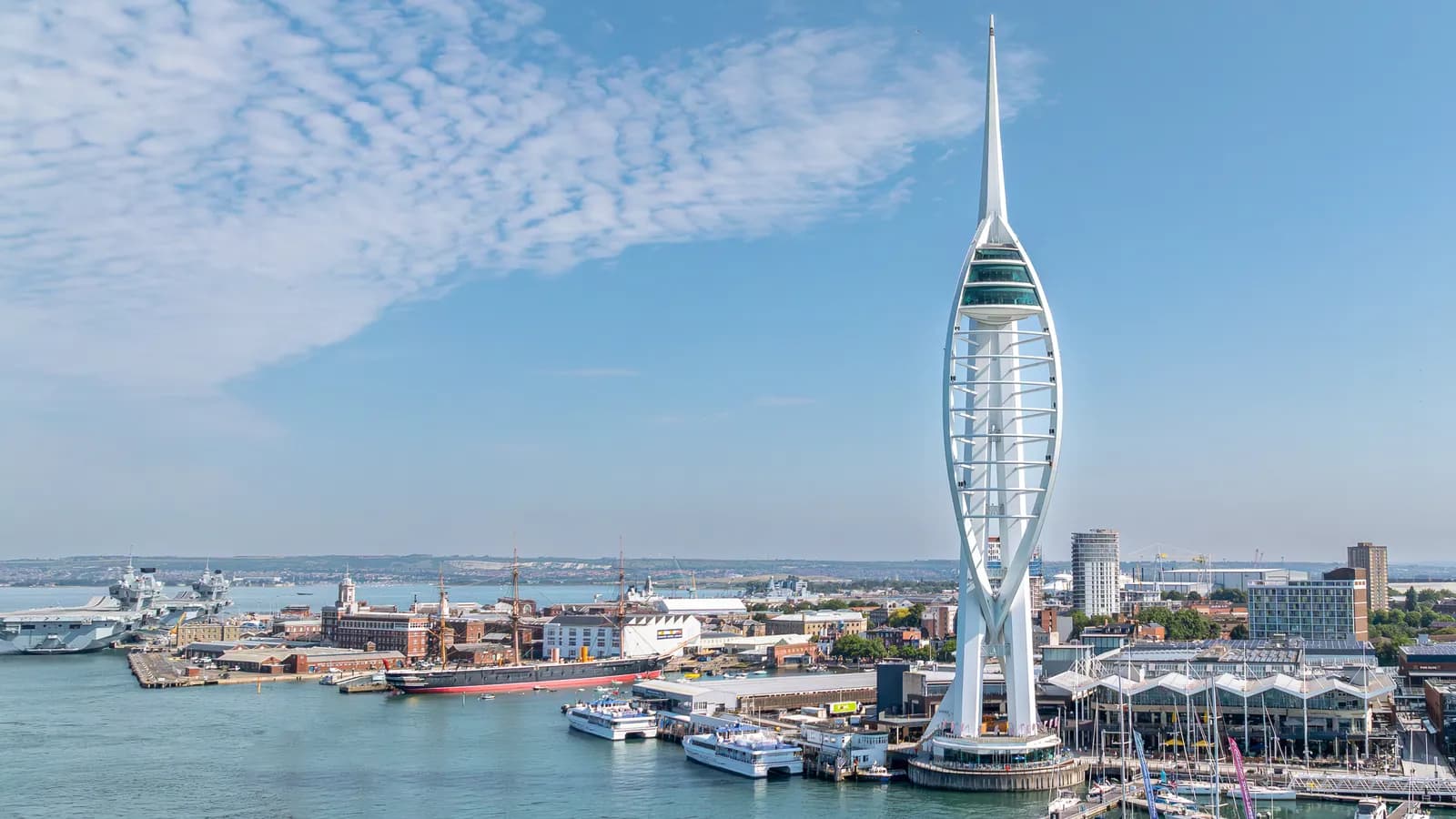
The red-brick buildings standing within HM Naval Base Portsmouth hold one of the most significant industrial sites in world history. Between 1799 and 1806, French-born engineer Marc Isambard Brunel created here what historians recognise as the first true production line: a system of automated machinery that could manufacture 130,000 ships' pulley blocks per year with just ten unskilled men, replacing 110 skilled craftsmen.
The Problem of Blocks
During the Napoleonic Wars, the Royal Navy required vast quantities of pulley blocks for its ships' rigging. Each warship needed hundreds of these wooden blocks, each containing a sheave (wheel), a pin (axle), and metal fittings. Traditional manufacture by hand was slow, expensive, and dependent on scarce skilled labour.
General Sir Samuel Bentham, appointed Inspector General of Naval Works in 1796, had already been experimenting with mechanised woodworking when he encountered Marc Brunel in 1798. Brunel, who had fled revolutionary France and established himself as an engineer in England, had designed an integrated system of machinery to automate block production entirely.
Revolutionary Machinery
In 1802, Brunel proposed his system to the Admiralty. The machines, constructed by the pioneering engineer Henry Maudslay at his Lambeth works, were installed at Portsmouth in three phases: medium blocks from January 1803, smaller blocks from May 1803, and large blocks from March 1805. The final installation comprised forty-five machines of twenty-two different types, powered by two 30-horsepower steam engines.
The machinery automated production of four components: shells cut from tree trunks and shaped by circular saws; sheaves made from lignum vitae wood; pins forged from metal and precision-turned; and metal coaks cast in bell-metal. The system achieved true interchangeability of parts; any sheave would fit any shell, and any pin would fit any sheave.
By 1808, the mills produced 130,000 blocks annually. Ten men operating the machines achieved what had previously required 110 skilled blockmakers. The production line concept established here; sequential operations, specialised machinery, division of labour, and standardised parts; would define manufacturing for the next two centuries.
A Notable Birth in Portsmouth
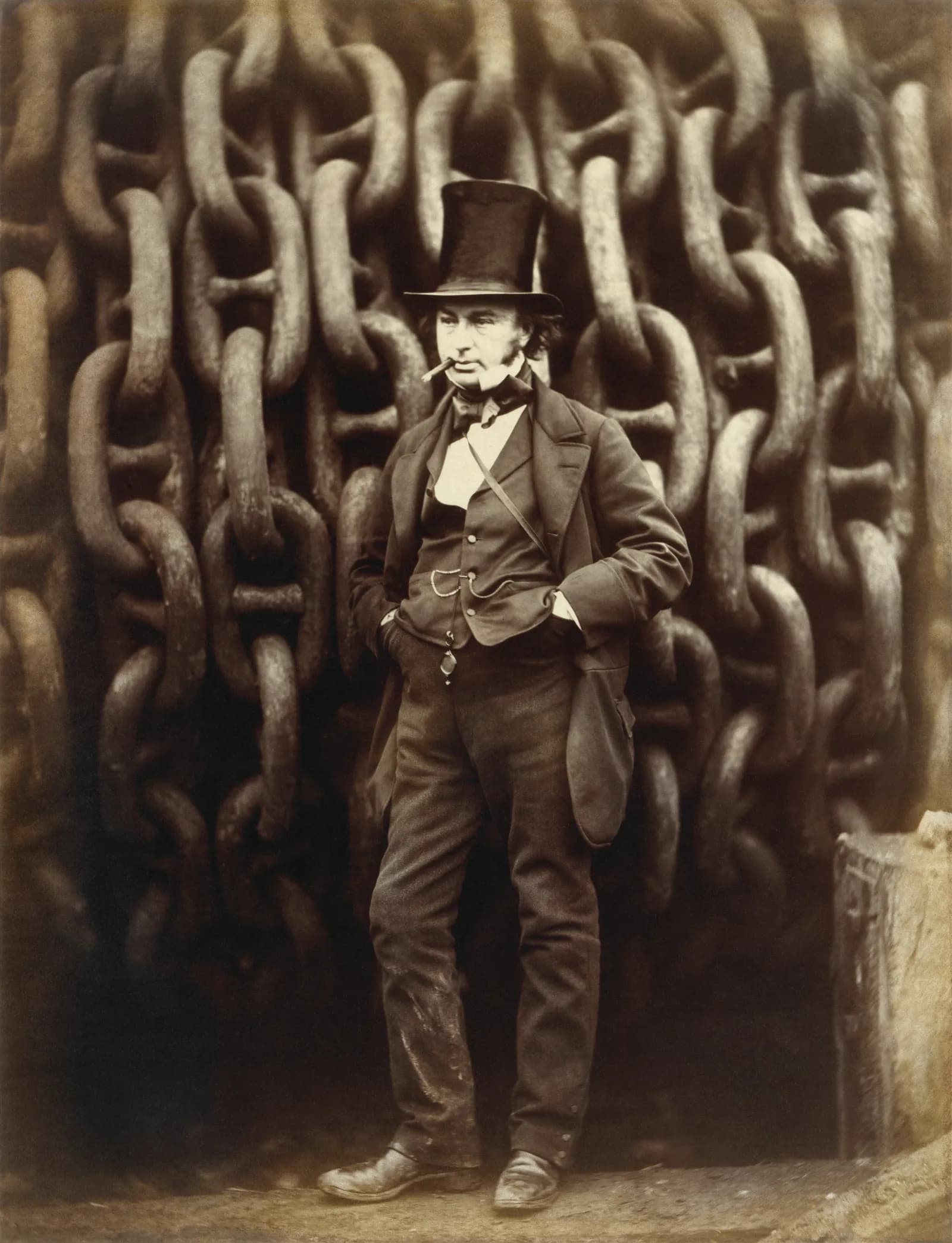
The Block Mills hold a particular significance for Britain's engineering heritage. On 9 April 1806, whilst his father was supervising installation of the machinery, Isambard Kingdom Brunel was born in Britain Street, Portsea. The world's most famous engineer entered the world in the same city where the world's first production line was taking shape. The Brunel family lived in Portsmouth throughout this period before moving to London.
Visitors and Recognition
The achievement attracted immediate international attention. Admiral Lord Nelson visited the mills on the morning of 24 September 1805, just before embarking for the Battle of Trafalgar. Princess Victoria, later Queen Victoria, toured the facility at age twelve as part of her education. Foreign dignitaries and military officers visited throughout the Napoleonic Wars to study the system.
The machinery was extensively documented in contemporary encyclopaedias including the Edinburgh Encyclopædia (1811), Rees's Cyclopædia (1812), and supplements to the Encyclopædia Britannica (1817). Marc Brunel was elected Fellow of the Royal Society in 1814 and knighted by Queen Victoria in 1841.
The Building Today
The Portsmouth Block Mills remain standing within the naval base, a Grade I listed building and Scheduled Monument. The complex comprises three parallel ranges in red brick with blue headers, featuring the original 1690s basin infilled with brick vaulting to create floorspace. Some original machinery survives in situ, including remnants of power transmission equipment, overhead shafting, and the frame of a Boulton and Watt beam engine from circa 1800.
Selection of the block-making machines was donated to the Science Museum in London between 1933 and 1951, where they are displayed as 'The first production line'. The Science Museum describes the Portsmouth machinery as establishing the principles that would later be termed 'the American system of manufactures', though the British installation predated American developments by decades.
Preservation and Access
The Block Mills remain in constant Royal Navy occupation and are not open to the public. English Heritage has conducted detailed surveys of the buildings since 2003. The structure was reported to be in poor repair as of 2006, with both English Heritage and the Ministry of Defence recognising it as a high priority for conservation. Block production using the original machinery finally ceased in the 1960s.
For those seeking to understand this pivotal site, some surviving machinery is displayed at the Science Museum in London. The Portsmouth Historic Dockyard, whilst not providing access to the Block Mills themselves, offers extensive context on the naval history within which Brunel's achievement took place.
Legacy
The Portsmouth Block Mills established the principles of mass production that would transform global industry. The combination of specialised machinery, sequential operations, standardised parts, and mechanical power created a template that Henry Ford and others would later apply to automobile manufacture. All of it began in a brick building in Portsmouth, where a French refugee engineer and his English collaborators built the future.